


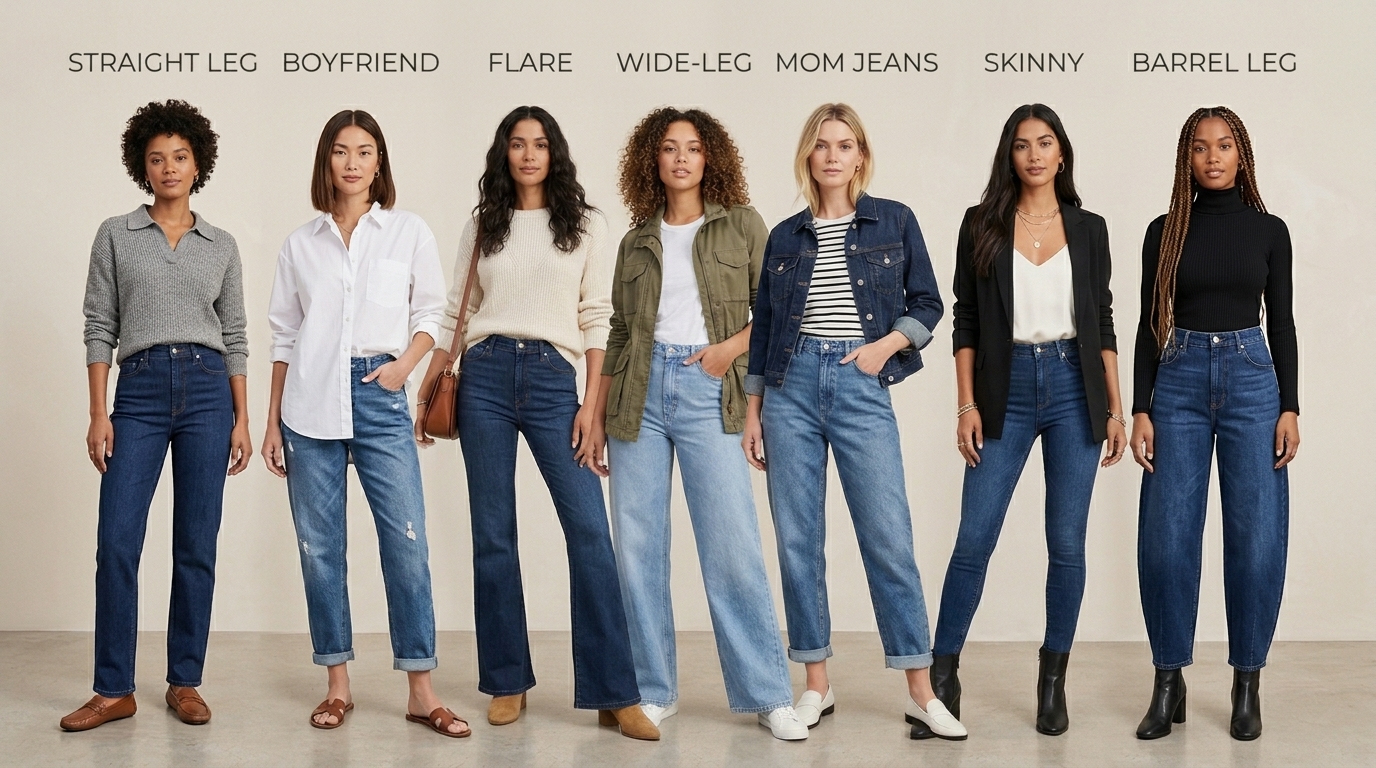
Every woman owns at least five pairs of jeans and somehow still says she has nothing to wear. That’s usually because most of us buy jeans by mood, not by fit. We see a wash we like, try it on, it feels fine standing in front of a store mirror, and then it sits in the wardrobe untouched for months because it doesn’t actually work with anything else we own. Once you understand the different types of jeans for women, shopping stops being a guessing game. You start picking based on what your body needs and what your day demands.
This guide breaks down fit, rise, fabric, and wash so you actually know what you’re buying, not just what you’re told looks good.
Fit Is Where It All Starts
Fit describes how denim moves from your hip down to your ankle, and it’s the single biggest factor in whether jeans feel amazing or feel like a punishment by hour three.
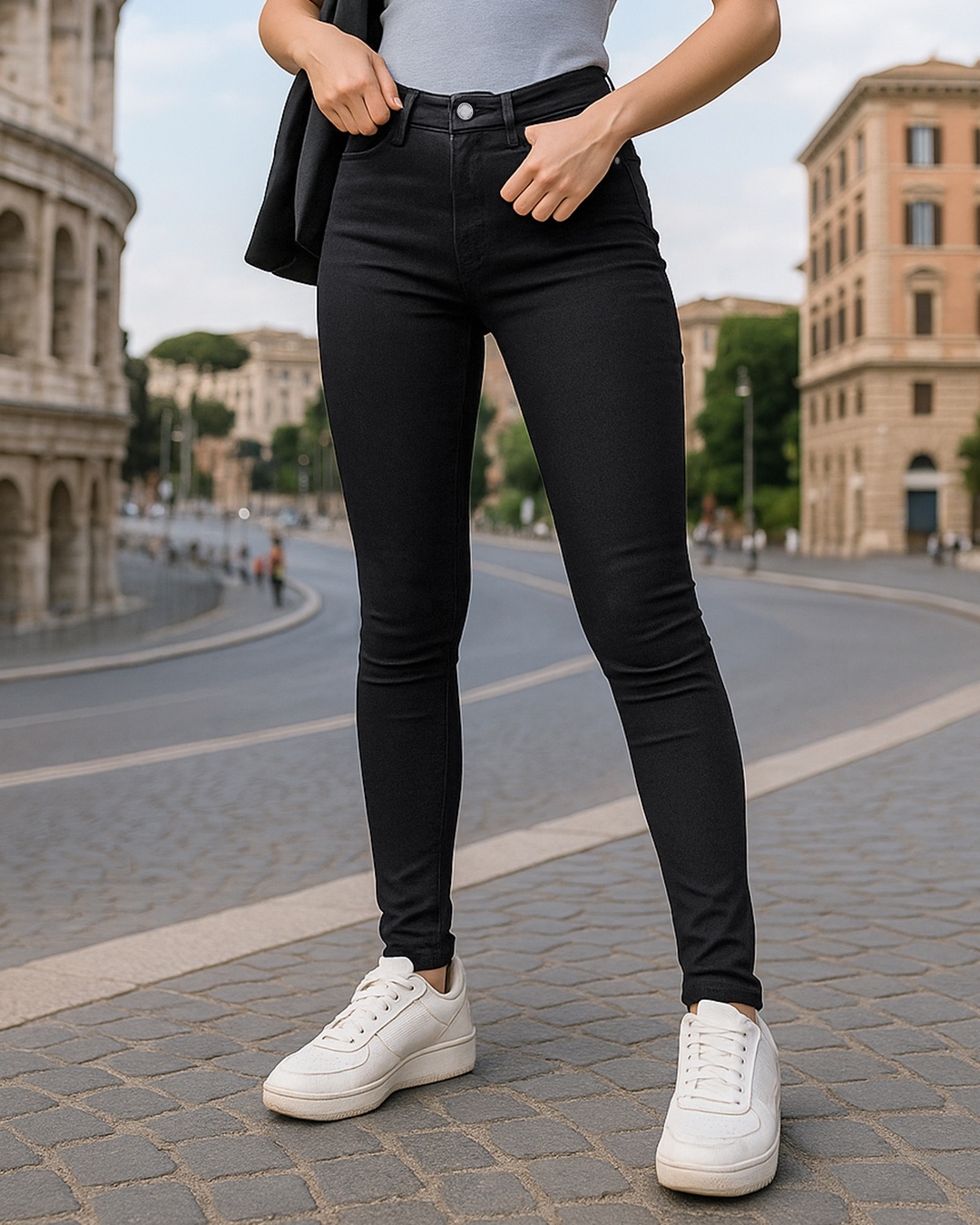
Skinny Jeans: Hugs the leg completely from waist to ankle. There’s no room for the fabric to move independently of your leg, which is exactly the point. Gives a clean line under boots, disappears nicely under an oversized shirt, and works well if you want the top half of your outfit to do all the talking. Needs real stretch in the fabric or it stops being comfortable fast, especially through long lectures or a full workday.
Slim Fit Jeans: Looks close to skinny at first glance but isn’t quite the same thing. Follows your leg shape without gripping it completely, leaving a touch more room through the calf and ankle. A lot of women confuse slim and skinny and end up disappointed either way. Slim is the better pick if you like a fitted look without the sausage-casing feeling that comes with true skinny denim.
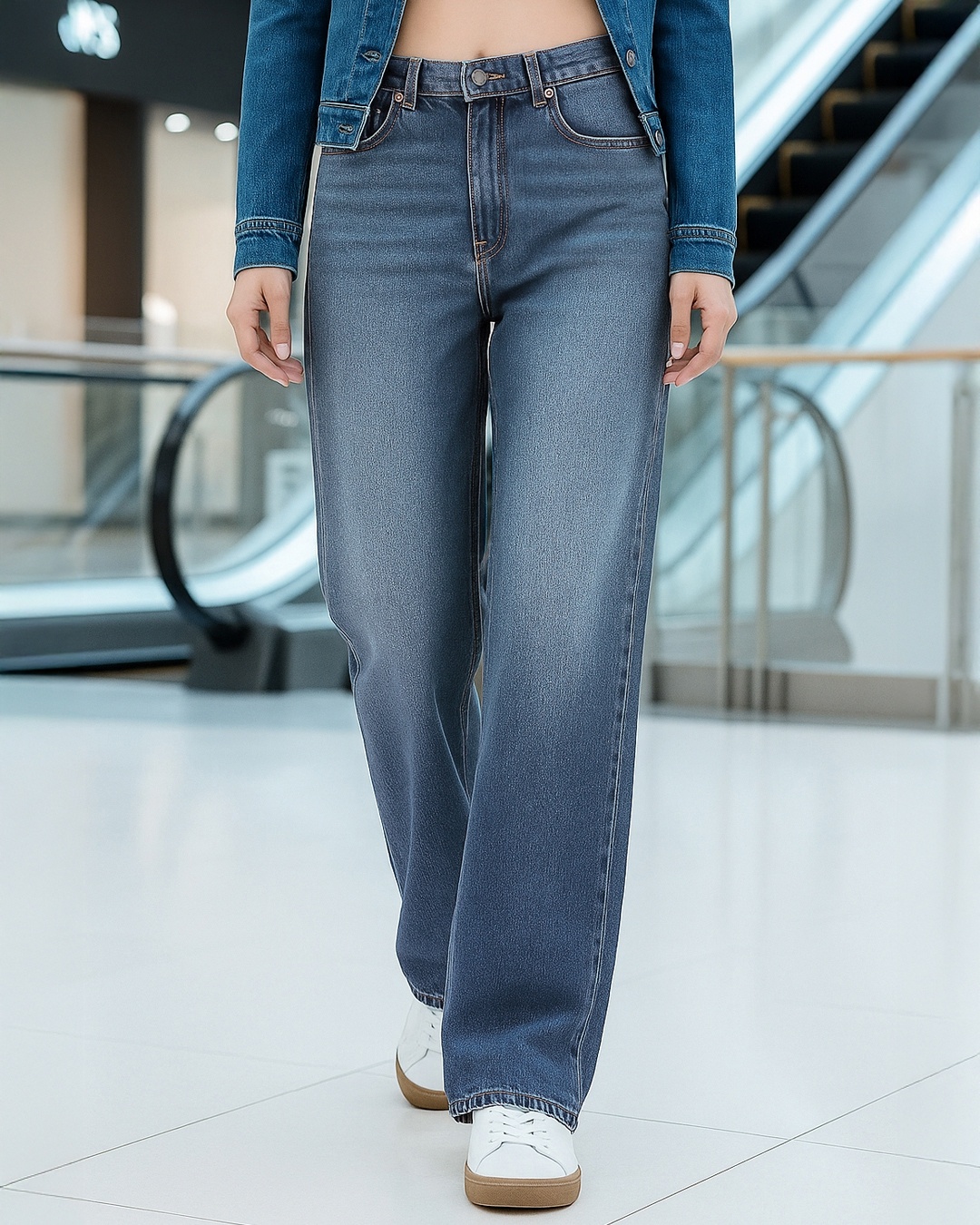
Straight Fit Jeans: Runs the same width from thigh to ankle with no taper and no flare anywhere in the leg. It’s the fit that has quietly stayed relevant while every other trend cycled in and out, mostly because it doesn’t try too hard in either direction. Works with heels, works with sneakers, works whether you’re heading to class or a family function.
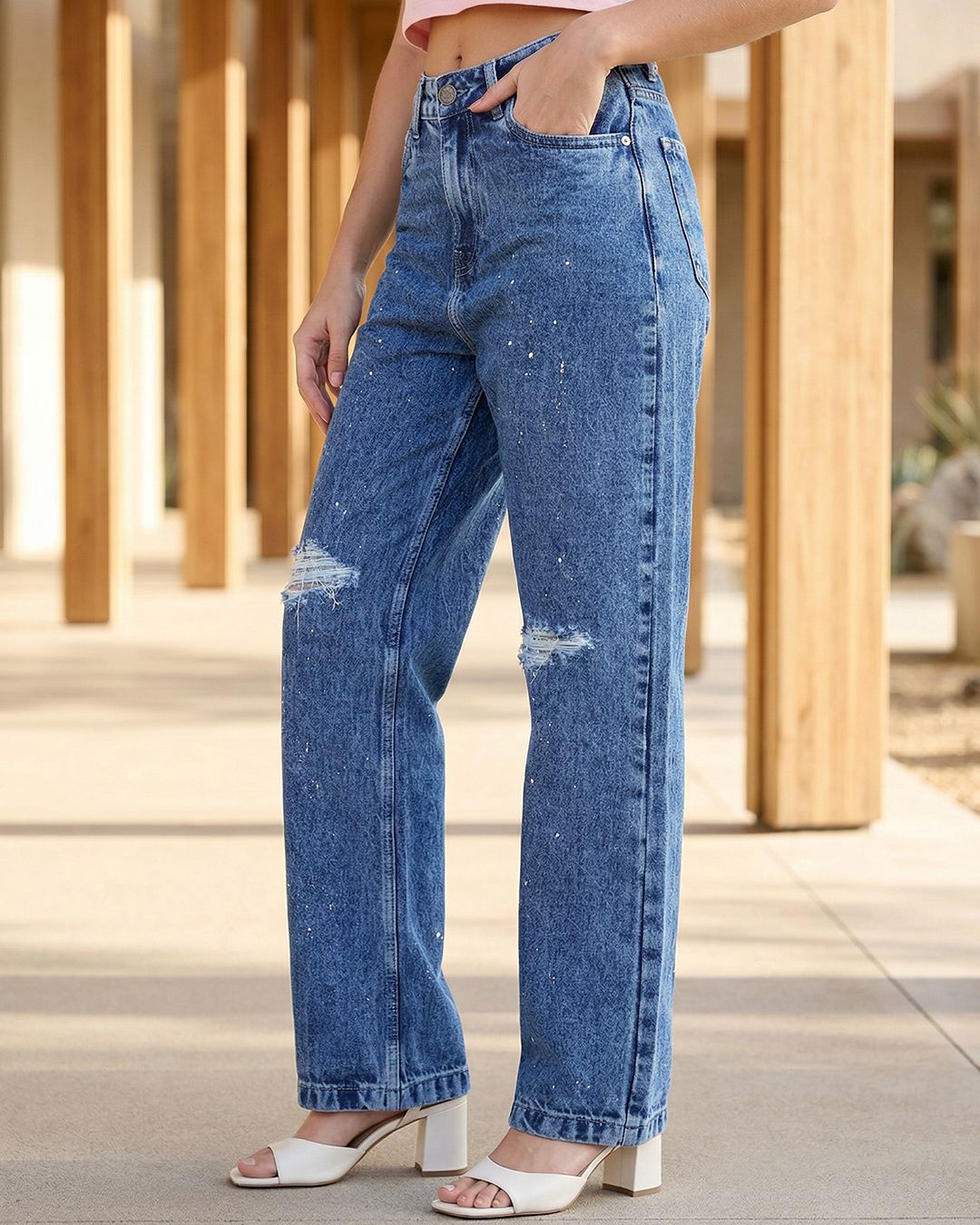
Tapered Jeans: Narrows gradually as it goes down, ending closer to the ankle without ever getting skin tight anywhere. Gives you structure without asking you to commit to a fully fitted leg the way skinny does. Solid middle ground if straight leg feels too roomy but skinny feels too restrictive.
The Comfort Cluster: Mom, Boyfriend, Girlfriend
These three get lumped together constantly but they’re built differently and serve different moods entirely.
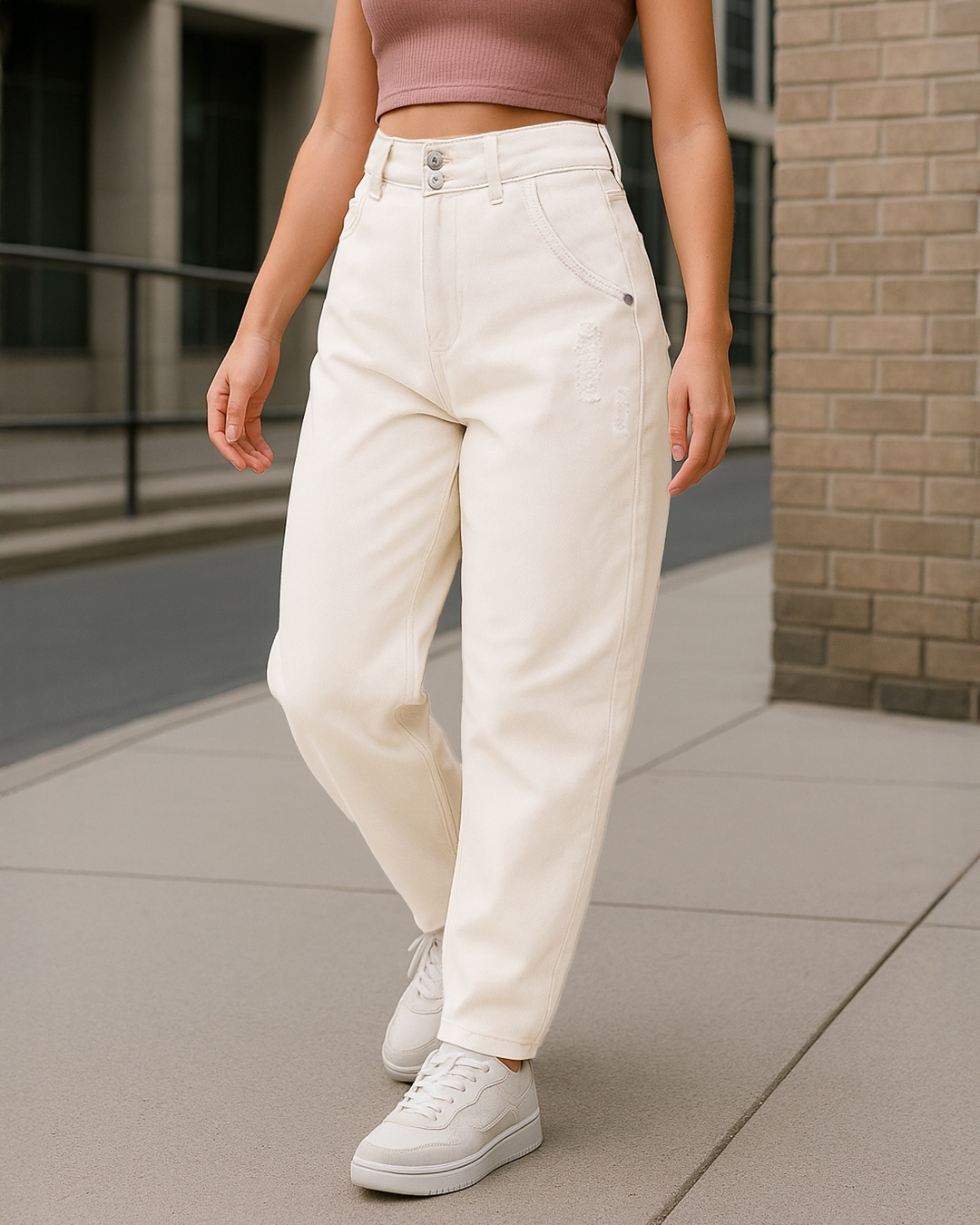
Mom Fit Jeans: Sits high on the waist, loosens through the hip and thigh, then tapers back in at the ankle. That high, loose, tapered combination gives them the boxy, retro shape everyone associates with the 90s. Forgiving around the stomach and hips since nothing is pulling tight there, which is a big reason they’ve stuck around this long despite fashion cycles constantly declaring them over.
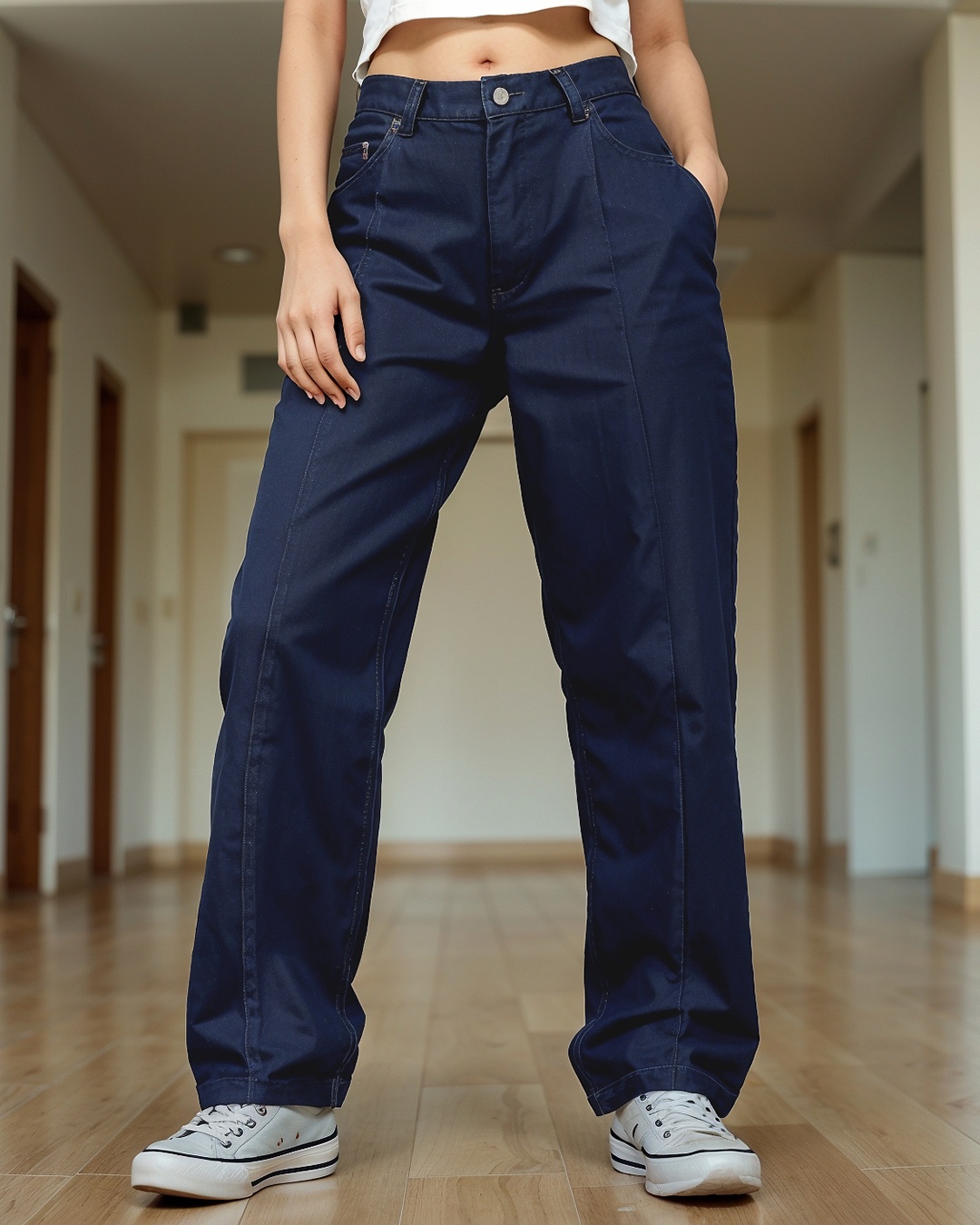
Boyfriend Fit Jeans: Sits lower on the hip and stays loose the entire way down, no taper at the ankle the way mom jeans have. The whole point is looking a little borrowed, a little undone, like you grabbed it off someone else’s chair. Works best when you balance the looseness with something fitted up top, otherwise the outfit reads as shapeless rather than intentionally relaxed.
Girlfriend Fit Jeans: Splits the difference between the two above. Straighter leg than boyfriend, sitting higher on the hip, built to look deliberate rather than thrown on last minute. If boyfriend jeans feel too sloppy but mom jeans feel too structured, this usually lands right where you want it to.
Room To Move: Wide-Leg, Baggy, Barrel
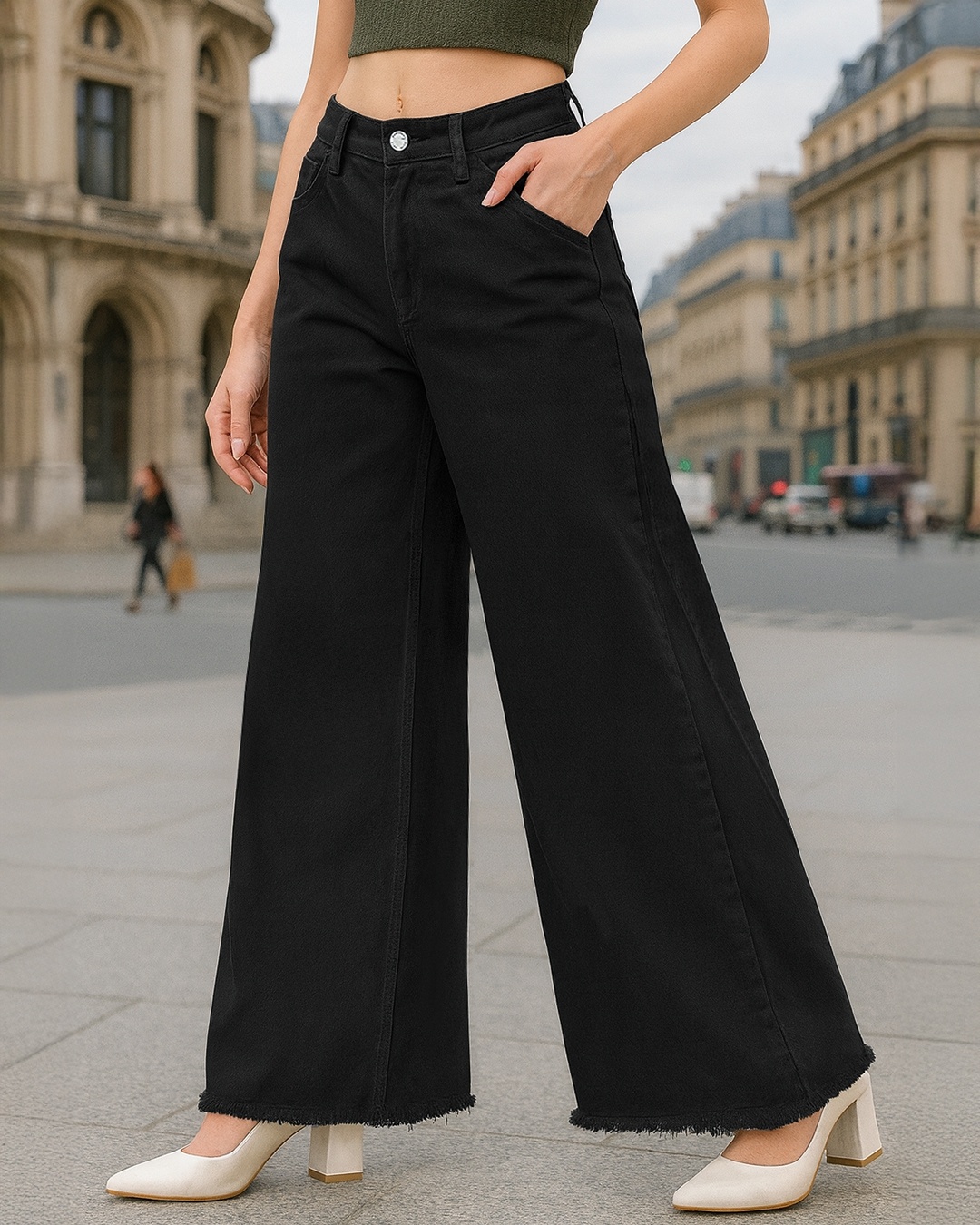
Wide-Leg Jeans: Stays fitted at the waist and then opens up dramatically from the hip all the way down. Having a real moment right now because it does something skinny jeans physically can’t, making your waist look smaller through contrast with the volume below, not by squeezing anything. Pair with something fitted on top, a crop top or tucked in shirt, and the proportions balance out beautifully.
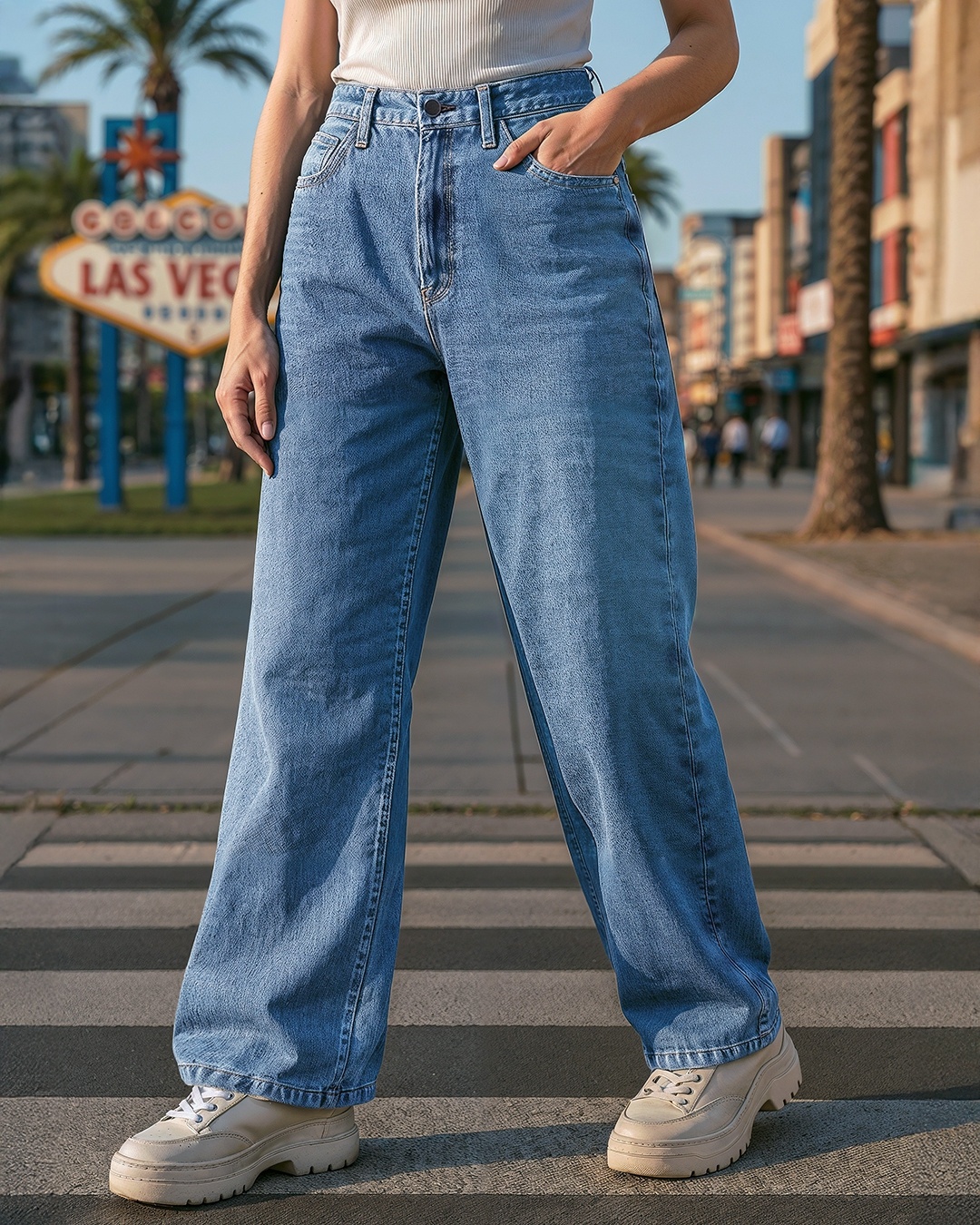
Baggy Jeans: Goes looser everywhere including the waist, not just the leg. Streetwear coded, built for comfort first, pairs best with something fitted on top so the whole outfit doesn’t collapse into one shapeless block of denim.
Barrel Jeans: Curves out through the thigh and tapers back in sharply at the ankle, creating a rounded silhouette that looks a bit like a horseshoe from the side. Newer to the Indian market compared to how long it’s been trending internationally, worth watching if your audience leans trend forward.
Bringing Back The Drama: Bootcut And Flare
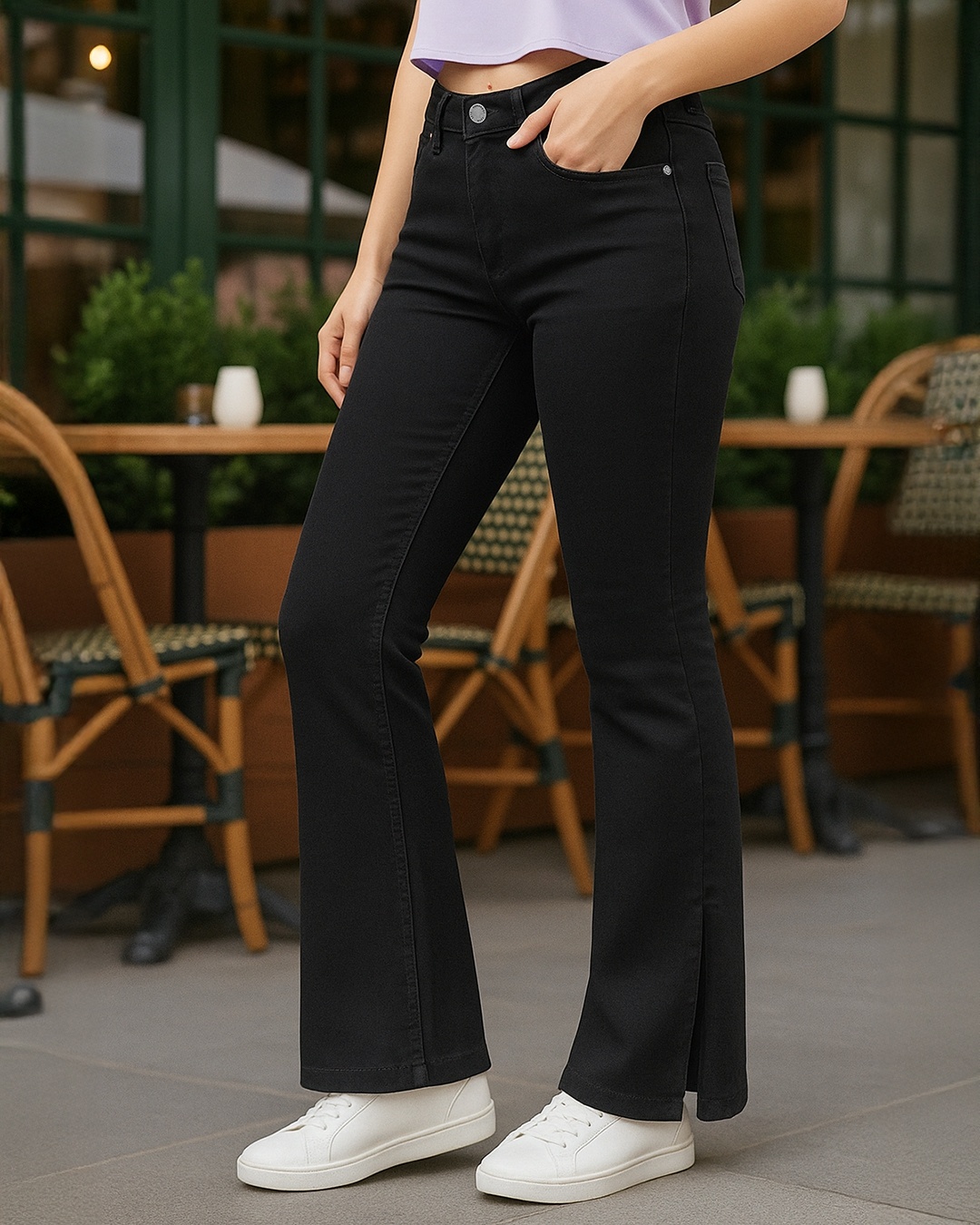
Bootcut Jeans: Stays fitted through the thigh and opens gently from the knee down, originally designed so the denim could sit over a boot without bunching up at the ankle.
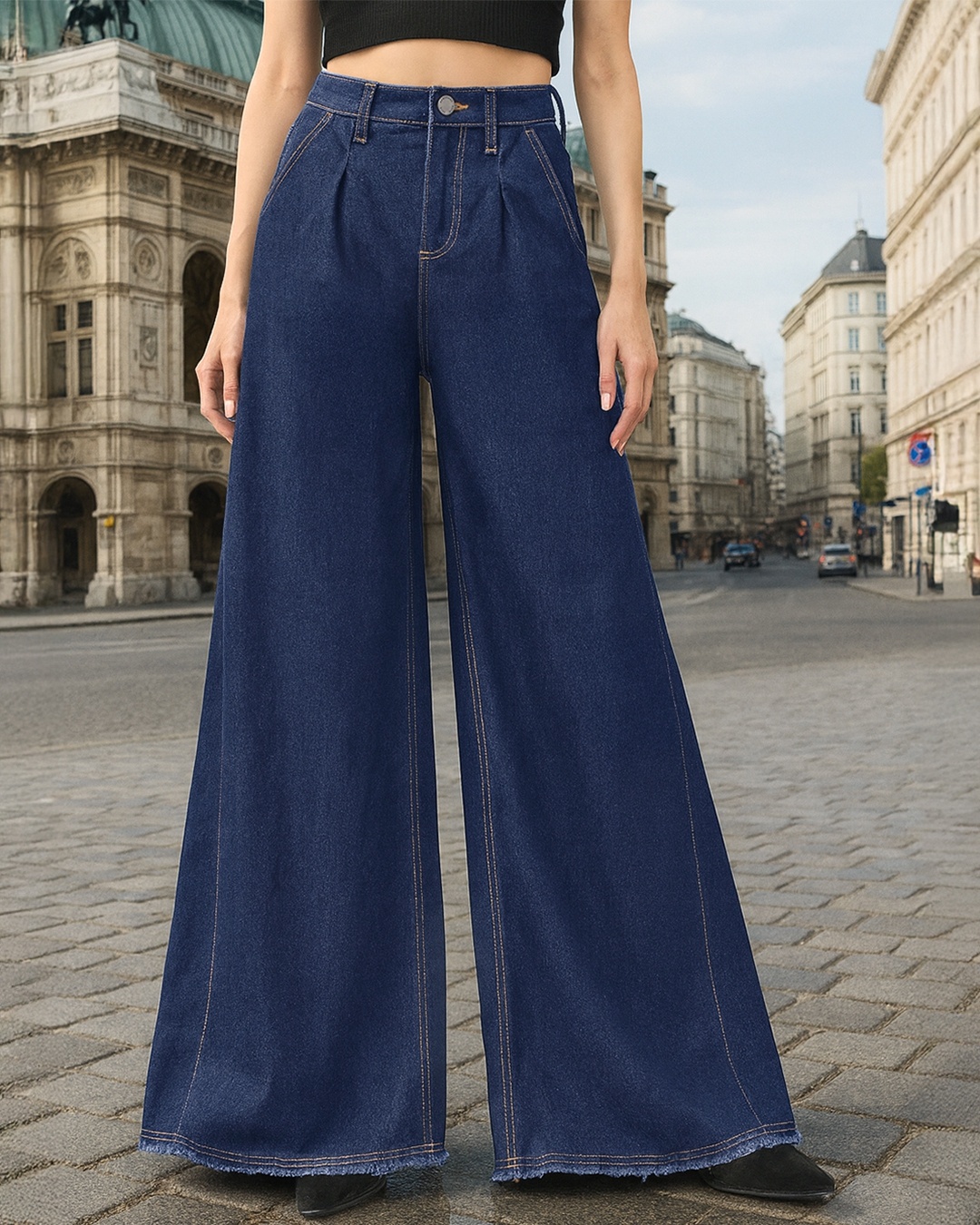
Flare Jeans: Takes that same basic idea and turns the volume up considerably, staying tight through the thigh and then widening out dramatically from the knee, straight out of a 70s throwback moment.
Both depend heavily on footwear to look right. A heel or platform lets the flare or bootcut fall properly and elongates the leg. Pair either with flats or sneakers and the extra fabric just pools at the ankle instead of skimming past it.
Where Rise Changes Everything
High rise sits at or above the navel and elongates the torso, the most forgiving option across body types. Mid rise sits just below the navel and is the easiest for everyday movement without constant adjusting. Low rise sits below the hip bone, brings back early 2000s energy, and works best on a defined waist since nothing above it holds things in place.
Fabric And Finish Worth Knowing
Distressed denim adds edge but reads casual, not office friendly. Shaping denim uses built in stretch panels to smooth and hold without changing the actual cut, available across skinny, straight, and flare alike. Look for 2 to 3 percent elastane for all day comfort, and know that lighter denim around 9 to 11 ounces feels softer while anything past 12 ounces holds shape longer but takes time to break in.
Colour Does Half The Styling Work
Dark wash is safest for work, reads put together instantly. Light wash is weekend energy, easy with tees or ethnic wear. Black denim sits in between, dressy enough for evening. Stonewash and acid wash bring a worn in, retro feel. Raw denim starts stiff with zero stretch and molds to your body over time.
What Suits Your Body Shape
- Hourglass: high rise, skinny or straight, keeps the waist defined
- Pear: bootcut, flare, or wide-leg to balance wider hips
- Apple: mid rise straight or tapered for a clean line
- Athletic frame: mom or flare adds shape where there isn’t much
FAQs
What’s the difference between skinny and slim fit jeans?
Skinny hugs the leg completely to the ankle. Slim follows the same shape but leaves slightly more room through the calf.
Which jeans suit a curvy body type best?
High rise, bootcut, and wide-leg tend to balance curves better than tighter fits through the leg.
Are mom jeans and boyfriend jeans the same thing?
No. Mom jeans sit higher and taper at the ankle. Boyfriend jeans sit lower and stay loose the whole way down.
What jeans are trending for 2026?
Wide-leg, baggy, and barrel silhouettes are leading right now, alongside a strong comeback for flare.
Which jeans work for daily office wear?
Straight or tapered fit in mid to high rise, dark wash, holds up best for a full day without looking too casual.
